From Props to Punchlines: When Products Become The story.
The most powerful product placement is when your brand becomes part of the conversation...literally." ~ Marc Pritchard, Chief Brand Officer, Procter & Gamble
Insights
Apr 5, 2025
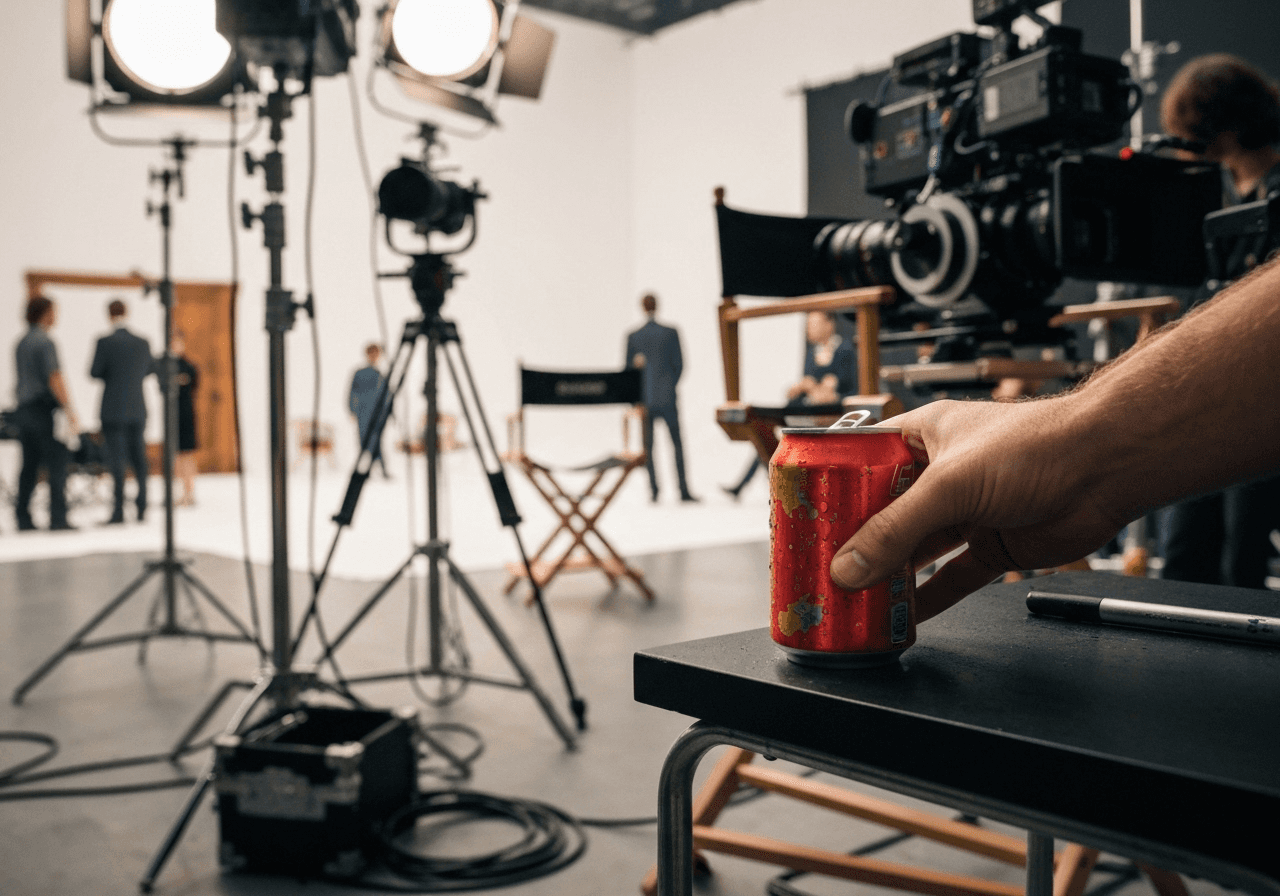
In 2022, global spending on product placement hit $23 billion, and it’s projected to grow by 14% annually over the next five years (PQ Media, Global Product Placement Forecast, 2023).
But here’s the twist: while traditional placements, showing the product on screen — still matter, a growing share of that spend is shifting to verbatims: product mentions in dialogue, lyrics, or scripts.
Why? Because in an age of streaming, ad-skipping, and screen fatigue, words stick where visuals fade.
Why This Shift Is Happening
Verbatim placements are harder to ignore. You can look away from a soda can on a table, but you can’t “unhear” a character saying, “I need a Coke.”
Hearing a brand name in a natural conversation triggers the mere-exposure effect (Zajonc, 1968), repeated, casual mentions make a brand feel more familiar and trustworthy without overt selling.
Nielsen research shows that brand recall from verbal mentions is 17% higher than from visual placements alone (Nielsen, Branded Integration Report, 2021).
Placement Fatigue
Audiences today are more marketing-savvy than ever, and they’re showing signs of product placement fatigue. Overly obvious or excessive placements can feel intrusive, pulling viewers out of the story and making the content feel like an ad reel.
Notable cases where it went wrong:
Transformers: Age of Extinction (2014)
The film featured over 55 brands, from Bud Light to Beats by Dre, often showcased in slow, lingering shots. Many viewers complained it felt like a “two-and-a-half-hour commercial,” with critics calling it “brand overload” (The Guardian, 2014). While the film grossed heavily worldwide, it became a case study in how too much product placement can damage critical reception and audience immersion.
Jurassic World (2015)
From Starbucks cups to Mercedes SUVs, the placements were so blatant that Forbes ran a piece titled “Jurassic World: The Movie That Ate Product Placement.” Social media lit up with sarcastic posts and memes mocking the over-commercialisation. While box office numbers were huge, the placements became a distraction and a talking point, for the wrong reasons.
I, Robot (2004)
Will Smith’s character explicitly praises his Converse sneakers in a way that felt shoehorned into the script. Many found the scene jarring and inauthentic, with critics noting it broke the film’s futuristic immersion. The Converse mention became infamous as an example of “forced” product integration.
When a Verbal Mention Feels Natural, and Changes an Industry
The opposite of this is when a brand mention emerges organically from the story, so natural that it doesn’t feel like advertising at all.
One of the most famous examples is from Sideways (2004). In a pivotal scene, Paul Giamatti’s character Miles, a wine snob with strong opinions, declares:
“If anyone orders Merlot, I’m leaving. I am NOT drinking any f**ing Merlot!”*
It wasn’t a paid placement. It wasn’t even positive. It was simply authentic to the character’s personality and the film’s tone.
The effect?
U.S. Merlot sales dropped by 2% in the year after the film’s release, while Pinot Noir (Miles’ preferred wine) sales jumped by 16% (Impact Databank, 2005).
Wine drinkers repeated the line in conversation, it became a meme in wine culture, and “Merlot” became shorthand for an unfashionable choice.
Why it worked:
It was in character: the line felt like something Miles would genuinely say.
It was emotionally charged: the passion (and profanity) made it memorable.
It entered the cultural lexicon: people quoted it, joked about it, and it influenced real buying behaviour.
This is the power of a verbal mention done right: it doesn’t feel like a brand is talking to you, it feels like a character is talking to another character, and you just happen to overhear it.
In the TikTok era, moments like this have even more potential. A line like Miles’ Merlot rant could easily become a trending sound, used in thousands of videos to express disdain for anything unpopular, giving the brand (or in this case, the grape) cultural relevance, for better or worse.
Why Verbal Mentions Feel More Natural in 2024
Verbal product mentions tap into how people already interact with brands in everyday conversation, and how they interact with content on social media.
On platforms like TikTok, trends are often built around sound bites, song lyrics, and catchphrases. When a brand name is spoken in a memorable way in a show, movie, or song, it can:
Be clipped and remixed into trending TikTok sounds.
Be used in memes, reaction videos, and duets.
Feel like part of the cultural conversation rather than a sales pitch.
When a character in a Netflix show casually says, “I need my Starbucks,” that clip can easily be turned into a TikTok sound that people use to express their own coffee cravings, giving the brand organic, user-driven amplification.
This blends brand presence with the way audiences already consume and share audio content, making it feel more authentic and less like an interruption.
When a Name Drop Becomes a Cultural Moment
1. The “Red Bull Gives You Wings” Effect, The Hangover (2009)
In The Hangover, Zach Galifianakis’ character casually mentions Red Bull while describing his night. It wasn’t a can in the background, it was part of the joke. Audiences laughed, repeated the line, and associated Red Bull with wild, unforgettable nights. Sales in the U.S. spiked by 14% in the quarter after the film’s release (Euromonitor, 2010). The mention felt authentic to the character and the moment, embedding the brand in a memorable, emotional scene.
2. “I’m Lovin’ It” Without the Jingle, The Office (U.S.)
In one episode, Michael Scott says, “I’m lovin’ it,” while eating a burger, without showing a McDonald’s logo. Fans instantly recognised the McDonald’s slogan, turning the moment into a meme. Social media chatter spiked, with McDonald’s seeing a 7% lift in brand mentions on Twitter that week (Brandwatch, 2012). It relied on shared cultural knowledge, the audience filled in the brand without being shown it.
3. The “Birkin Bag” Boom, Sex and the City
When Samantha Jones famously says, “It’s not a bag, it’s a Birkin,” the line became a pop culture reference. Waitlists for Hermès Birkin bags reportedly grew by 30% after the episode aired (Forbes, 2001). Viewers who had never heard of the bag before suddenly wanted to be “in” on the cultural status symbol. The mention wasn’t about selling — it was about identity, aspiration, and belonging.
The Behavioural Triggers at Play
Familiarity Bias: Hearing a brand name repeatedly makes it feel trustworthy.
Social Proof: If characters you admire or relate to use or mention a brand, it signals cultural relevance.
Cultural Embedding: A brand becomes shorthand for an idea, lifestyle, or emotion (e.g., “Birkin” = luxury).
Memory Encoding: Words in dialogue are processed differently than background visuals, often leading to stronger recall.
Stop Shouting and Start Belonging
The evolution from visual product placement to verbal mentions isn’t just a marketing tactic, it’s a reflection of a deeper cultural shift.
Audiences today are living in a hyper-commercialised world. Every scroll, every swipe, every video seems to come with a sales pitch. In this environment, the brands that win aren’t the ones that shout the loudest, they’re the ones that blend seamlessly into the conversation.
Verbal mentions are agile. They can be woven into character arcs, jokes, or emotional beats without breaking immersion. They’re less about “look at me” and more about “I’m already part of your world.”
Studies show higher recall rates for verbal mentions, especially when they’re tied to memorable scenes or emotional moments. And in the TikTok era, a single line can ripple through culture as a trending sound, meme, or inside joke.
Psychologically, they feel authentic because they mirror how we talk about brands in real life, casually, in passing, as part of our own stories. That authenticity triggers trust, familiarity, and cultural resonance.
The Sideways Merlot moment didn’t sell a product, it sold a feeling, an opinion, a cultural shift. The Sex and the City Birkin line didn’t name a bag, it cemented a status symbol in the public imagination. These weren’t ads. They were story beats that happened to carry a brand along for the ride.
And that’s the lesson:
The most powerful product placement is the one that doesn’t feel placed at all.
In the end, the future of brand integration isn’t about being only seen, it’s about being remembered. And in a world where culture is shaped by what we quote, remix, and repeat, the brands that become part of the dialogue will be the ones that live longest in the audience’s mind.
Logos fade. Lines last forever.

More to Discover

From Props to Punchlines: When Products Become The story.
The most powerful product placement is when your brand becomes part of the conversation...literally." ~ Marc Pritchard, Chief Brand Officer, Procter & Gamble
Insights
Apr 5, 2025
In 2022, global spending on product placement hit $23 billion, and it’s projected to grow by 14% annually over the next five years (PQ Media, Global Product Placement Forecast, 2023).
But here’s the twist: while traditional placements, showing the product on screen — still matter, a growing share of that spend is shifting to verbatims: product mentions in dialogue, lyrics, or scripts.
Why? Because in an age of streaming, ad-skipping, and screen fatigue, words stick where visuals fade.
Why This Shift Is Happening
Verbatim placements are harder to ignore. You can look away from a soda can on a table, but you can’t “unhear” a character saying, “I need a Coke.”
Hearing a brand name in a natural conversation triggers the mere-exposure effect (Zajonc, 1968), repeated, casual mentions make a brand feel more familiar and trustworthy without overt selling.
Nielsen research shows that brand recall from verbal mentions is 17% higher than from visual placements alone (Nielsen, Branded Integration Report, 2021).
Placement Fatigue
Audiences today are more marketing-savvy than ever, and they’re showing signs of product placement fatigue. Overly obvious or excessive placements can feel intrusive, pulling viewers out of the story and making the content feel like an ad reel.
Notable cases where it went wrong:
Transformers: Age of Extinction (2014)
The film featured over 55 brands, from Bud Light to Beats by Dre, often showcased in slow, lingering shots. Many viewers complained it felt like a “two-and-a-half-hour commercial,” with critics calling it “brand overload” (The Guardian, 2014). While the film grossed heavily worldwide, it became a case study in how too much product placement can damage critical reception and audience immersion.
Jurassic World (2015)
From Starbucks cups to Mercedes SUVs, the placements were so blatant that Forbes ran a piece titled “Jurassic World: The Movie That Ate Product Placement.” Social media lit up with sarcastic posts and memes mocking the over-commercialisation. While box office numbers were huge, the placements became a distraction and a talking point, for the wrong reasons.
I, Robot (2004)
Will Smith’s character explicitly praises his Converse sneakers in a way that felt shoehorned into the script. Many found the scene jarring and inauthentic, with critics noting it broke the film’s futuristic immersion. The Converse mention became infamous as an example of “forced” product integration.
When a Verbal Mention Feels Natural, and Changes an Industry
The opposite of this is when a brand mention emerges organically from the story, so natural that it doesn’t feel like advertising at all.
One of the most famous examples is from Sideways (2004). In a pivotal scene, Paul Giamatti’s character Miles, a wine snob with strong opinions, declares:
“If anyone orders Merlot, I’m leaving. I am NOT drinking any f**ing Merlot!”*
It wasn’t a paid placement. It wasn’t even positive. It was simply authentic to the character’s personality and the film’s tone.
The effect?
U.S. Merlot sales dropped by 2% in the year after the film’s release, while Pinot Noir (Miles’ preferred wine) sales jumped by 16% (Impact Databank, 2005).
Wine drinkers repeated the line in conversation, it became a meme in wine culture, and “Merlot” became shorthand for an unfashionable choice.
Why it worked:
It was in character: the line felt like something Miles would genuinely say.
It was emotionally charged: the passion (and profanity) made it memorable.
It entered the cultural lexicon: people quoted it, joked about it, and it influenced real buying behaviour.
This is the power of a verbal mention done right: it doesn’t feel like a brand is talking to you, it feels like a character is talking to another character, and you just happen to overhear it.
In the TikTok era, moments like this have even more potential. A line like Miles’ Merlot rant could easily become a trending sound, used in thousands of videos to express disdain for anything unpopular, giving the brand (or in this case, the grape) cultural relevance, for better or worse.
Why Verbal Mentions Feel More Natural in 2024
Verbal product mentions tap into how people already interact with brands in everyday conversation, and how they interact with content on social media.
On platforms like TikTok, trends are often built around sound bites, song lyrics, and catchphrases. When a brand name is spoken in a memorable way in a show, movie, or song, it can:
Be clipped and remixed into trending TikTok sounds.
Be used in memes, reaction videos, and duets.
Feel like part of the cultural conversation rather than a sales pitch.
When a character in a Netflix show casually says, “I need my Starbucks,” that clip can easily be turned into a TikTok sound that people use to express their own coffee cravings, giving the brand organic, user-driven amplification.
This blends brand presence with the way audiences already consume and share audio content, making it feel more authentic and less like an interruption.
When a Name Drop Becomes a Cultural Moment
1. The “Red Bull Gives You Wings” Effect, The Hangover (2009)
In The Hangover, Zach Galifianakis’ character casually mentions Red Bull while describing his night. It wasn’t a can in the background, it was part of the joke. Audiences laughed, repeated the line, and associated Red Bull with wild, unforgettable nights. Sales in the U.S. spiked by 14% in the quarter after the film’s release (Euromonitor, 2010). The mention felt authentic to the character and the moment, embedding the brand in a memorable, emotional scene.
2. “I’m Lovin’ It” Without the Jingle, The Office (U.S.)
In one episode, Michael Scott says, “I’m lovin’ it,” while eating a burger, without showing a McDonald’s logo. Fans instantly recognised the McDonald’s slogan, turning the moment into a meme. Social media chatter spiked, with McDonald’s seeing a 7% lift in brand mentions on Twitter that week (Brandwatch, 2012). It relied on shared cultural knowledge, the audience filled in the brand without being shown it.
3. The “Birkin Bag” Boom, Sex and the City
When Samantha Jones famously says, “It’s not a bag, it’s a Birkin,” the line became a pop culture reference. Waitlists for Hermès Birkin bags reportedly grew by 30% after the episode aired (Forbes, 2001). Viewers who had never heard of the bag before suddenly wanted to be “in” on the cultural status symbol. The mention wasn’t about selling — it was about identity, aspiration, and belonging.
The Behavioural Triggers at Play
Familiarity Bias: Hearing a brand name repeatedly makes it feel trustworthy.
Social Proof: If characters you admire or relate to use or mention a brand, it signals cultural relevance.
Cultural Embedding: A brand becomes shorthand for an idea, lifestyle, or emotion (e.g., “Birkin” = luxury).
Memory Encoding: Words in dialogue are processed differently than background visuals, often leading to stronger recall.
Stop Shouting and Start Belonging
The evolution from visual product placement to verbal mentions isn’t just a marketing tactic, it’s a reflection of a deeper cultural shift.
Audiences today are living in a hyper-commercialised world. Every scroll, every swipe, every video seems to come with a sales pitch. In this environment, the brands that win aren’t the ones that shout the loudest, they’re the ones that blend seamlessly into the conversation.
Verbal mentions are agile. They can be woven into character arcs, jokes, or emotional beats without breaking immersion. They’re less about “look at me” and more about “I’m already part of your world.”
Studies show higher recall rates for verbal mentions, especially when they’re tied to memorable scenes or emotional moments. And in the TikTok era, a single line can ripple through culture as a trending sound, meme, or inside joke.
Psychologically, they feel authentic because they mirror how we talk about brands in real life, casually, in passing, as part of our own stories. That authenticity triggers trust, familiarity, and cultural resonance.
The Sideways Merlot moment didn’t sell a product, it sold a feeling, an opinion, a cultural shift. The Sex and the City Birkin line didn’t name a bag, it cemented a status symbol in the public imagination. These weren’t ads. They were story beats that happened to carry a brand along for the ride.
And that’s the lesson:
The most powerful product placement is the one that doesn’t feel placed at all.
In the end, the future of brand integration isn’t about being only seen, it’s about being remembered. And in a world where culture is shaped by what we quote, remix, and repeat, the brands that become part of the dialogue will be the ones that live longest in the audience’s mind.
Logos fade. Lines last forever.
More to Discover
From Props to Punchlines: When Products Become The story.
The most powerful product placement is when your brand becomes part of the conversation...literally." ~ Marc Pritchard, Chief Brand Officer, Procter & Gamble
Insights
Apr 5, 2025
In 2022, global spending on product placement hit $23 billion, and it’s projected to grow by 14% annually over the next five years (PQ Media, Global Product Placement Forecast, 2023).
But here’s the twist: while traditional placements, showing the product on screen — still matter, a growing share of that spend is shifting to verbatims: product mentions in dialogue, lyrics, or scripts.
Why? Because in an age of streaming, ad-skipping, and screen fatigue, words stick where visuals fade.
Why This Shift Is Happening
Verbatim placements are harder to ignore. You can look away from a soda can on a table, but you can’t “unhear” a character saying, “I need a Coke.”
Hearing a brand name in a natural conversation triggers the mere-exposure effect (Zajonc, 1968), repeated, casual mentions make a brand feel more familiar and trustworthy without overt selling.
Nielsen research shows that brand recall from verbal mentions is 17% higher than from visual placements alone (Nielsen, Branded Integration Report, 2021).
Placement Fatigue
Audiences today are more marketing-savvy than ever, and they’re showing signs of product placement fatigue. Overly obvious or excessive placements can feel intrusive, pulling viewers out of the story and making the content feel like an ad reel.
Notable cases where it went wrong:
Transformers: Age of Extinction (2014)
The film featured over 55 brands, from Bud Light to Beats by Dre, often showcased in slow, lingering shots. Many viewers complained it felt like a “two-and-a-half-hour commercial,” with critics calling it “brand overload” (The Guardian, 2014). While the film grossed heavily worldwide, it became a case study in how too much product placement can damage critical reception and audience immersion.
Jurassic World (2015)
From Starbucks cups to Mercedes SUVs, the placements were so blatant that Forbes ran a piece titled “Jurassic World: The Movie That Ate Product Placement.” Social media lit up with sarcastic posts and memes mocking the over-commercialisation. While box office numbers were huge, the placements became a distraction and a talking point, for the wrong reasons.
I, Robot (2004)
Will Smith’s character explicitly praises his Converse sneakers in a way that felt shoehorned into the script. Many found the scene jarring and inauthentic, with critics noting it broke the film’s futuristic immersion. The Converse mention became infamous as an example of “forced” product integration.
When a Verbal Mention Feels Natural, and Changes an Industry
The opposite of this is when a brand mention emerges organically from the story, so natural that it doesn’t feel like advertising at all.
One of the most famous examples is from Sideways (2004). In a pivotal scene, Paul Giamatti’s character Miles, a wine snob with strong opinions, declares:
“If anyone orders Merlot, I’m leaving. I am NOT drinking any f**ing Merlot!”*
It wasn’t a paid placement. It wasn’t even positive. It was simply authentic to the character’s personality and the film’s tone.
The effect?
U.S. Merlot sales dropped by 2% in the year after the film’s release, while Pinot Noir (Miles’ preferred wine) sales jumped by 16% (Impact Databank, 2005).
Wine drinkers repeated the line in conversation, it became a meme in wine culture, and “Merlot” became shorthand for an unfashionable choice.
Why it worked:
It was in character: the line felt like something Miles would genuinely say.
It was emotionally charged: the passion (and profanity) made it memorable.
It entered the cultural lexicon: people quoted it, joked about it, and it influenced real buying behaviour.
This is the power of a verbal mention done right: it doesn’t feel like a brand is talking to you, it feels like a character is talking to another character, and you just happen to overhear it.
In the TikTok era, moments like this have even more potential. A line like Miles’ Merlot rant could easily become a trending sound, used in thousands of videos to express disdain for anything unpopular, giving the brand (or in this case, the grape) cultural relevance, for better or worse.
Why Verbal Mentions Feel More Natural in 2024
Verbal product mentions tap into how people already interact with brands in everyday conversation, and how they interact with content on social media.
On platforms like TikTok, trends are often built around sound bites, song lyrics, and catchphrases. When a brand name is spoken in a memorable way in a show, movie, or song, it can:
Be clipped and remixed into trending TikTok sounds.
Be used in memes, reaction videos, and duets.
Feel like part of the cultural conversation rather than a sales pitch.
When a character in a Netflix show casually says, “I need my Starbucks,” that clip can easily be turned into a TikTok sound that people use to express their own coffee cravings, giving the brand organic, user-driven amplification.
This blends brand presence with the way audiences already consume and share audio content, making it feel more authentic and less like an interruption.
When a Name Drop Becomes a Cultural Moment
1. The “Red Bull Gives You Wings” Effect, The Hangover (2009)
In The Hangover, Zach Galifianakis’ character casually mentions Red Bull while describing his night. It wasn’t a can in the background, it was part of the joke. Audiences laughed, repeated the line, and associated Red Bull with wild, unforgettable nights. Sales in the U.S. spiked by 14% in the quarter after the film’s release (Euromonitor, 2010). The mention felt authentic to the character and the moment, embedding the brand in a memorable, emotional scene.
2. “I’m Lovin’ It” Without the Jingle, The Office (U.S.)
In one episode, Michael Scott says, “I’m lovin’ it,” while eating a burger, without showing a McDonald’s logo. Fans instantly recognised the McDonald’s slogan, turning the moment into a meme. Social media chatter spiked, with McDonald’s seeing a 7% lift in brand mentions on Twitter that week (Brandwatch, 2012). It relied on shared cultural knowledge, the audience filled in the brand without being shown it.
3. The “Birkin Bag” Boom, Sex and the City
When Samantha Jones famously says, “It’s not a bag, it’s a Birkin,” the line became a pop culture reference. Waitlists for Hermès Birkin bags reportedly grew by 30% after the episode aired (Forbes, 2001). Viewers who had never heard of the bag before suddenly wanted to be “in” on the cultural status symbol. The mention wasn’t about selling — it was about identity, aspiration, and belonging.
The Behavioural Triggers at Play
Familiarity Bias: Hearing a brand name repeatedly makes it feel trustworthy.
Social Proof: If characters you admire or relate to use or mention a brand, it signals cultural relevance.
Cultural Embedding: A brand becomes shorthand for an idea, lifestyle, or emotion (e.g., “Birkin” = luxury).
Memory Encoding: Words in dialogue are processed differently than background visuals, often leading to stronger recall.
Stop Shouting and Start Belonging
The evolution from visual product placement to verbal mentions isn’t just a marketing tactic, it’s a reflection of a deeper cultural shift.
Audiences today are living in a hyper-commercialised world. Every scroll, every swipe, every video seems to come with a sales pitch. In this environment, the brands that win aren’t the ones that shout the loudest, they’re the ones that blend seamlessly into the conversation.
Verbal mentions are agile. They can be woven into character arcs, jokes, or emotional beats without breaking immersion. They’re less about “look at me” and more about “I’m already part of your world.”
Studies show higher recall rates for verbal mentions, especially when they’re tied to memorable scenes or emotional moments. And in the TikTok era, a single line can ripple through culture as a trending sound, meme, or inside joke.
Psychologically, they feel authentic because they mirror how we talk about brands in real life, casually, in passing, as part of our own stories. That authenticity triggers trust, familiarity, and cultural resonance.
The Sideways Merlot moment didn’t sell a product, it sold a feeling, an opinion, a cultural shift. The Sex and the City Birkin line didn’t name a bag, it cemented a status symbol in the public imagination. These weren’t ads. They were story beats that happened to carry a brand along for the ride.
And that’s the lesson:
The most powerful product placement is the one that doesn’t feel placed at all.
In the end, the future of brand integration isn’t about being only seen, it’s about being remembered. And in a world where culture is shaped by what we quote, remix, and repeat, the brands that become part of the dialogue will be the ones that live longest in the audience’s mind.
Logos fade. Lines last forever.